
Ways I work
Evidence-based therapy, shaped around you
I work in an integrative way, drawing on four related approaches: EMDR, attachment-informed EMDR, Internal Family Systems (IFS) and art psychotherapy. I chose these because they complement one another and, between them, offer safe and evidence-informed ways to work with most of the difficulties that bring people to therapy.
Sometimes one approach on its own is the right fit, and sometimes the work weaves several together. We decide that together, at a pace that feels manageable to you, and nothing happens without your agreement. My aim is not a fixed method but a way of working that is shaped around you and what you need.
Some of these approaches carry formal recommendations. EMDR, for example, is recommended by NICE as a trauma-focused therapy for PTSD. Others, such as IFS, are newer to the research world but have a growing evidence base. On each page below I try to be clear and honest about what is known, and about what is still emerging.
Each of these has its own page, so you can read about the one that interests you: EMDR, attachment-informed EMDR, IFS, and art psychotherapy, plus a page on how I integrate them. If you are not sure where to begin, the map below points common concerns towards the approaches that tend to help.
EMDR (Eye Movement Desensitisation and Reprocessing)
EMDR (Eye Movement Desensitisation and Reprocessing) is a NICE-recommended, trauma-focused therapy that uses bilateral stimulation, such as guided eye movements or gentle…
Attachment-informed EMDR
Attachment-informed EMDR, also known as attachment-focused EMDR, is a gentle, relationship-centred adaptation of standard EMDR therapy that uses attachment, rather than a…
Internal Family Systems (IFS) therapy
Internal Family Systems (IFS) is a non-pathologising, evidence-based model of therapy which holds that the mind is naturally made up of many different ‘parts’, and that beneath…
Art Psychotherapy
Art psychotherapy is a form of psychotherapy, delivered by an HCPC-registered art psychotherapist, that uses image-making and other creative materials alongside talking to help…
How I integrate art psychotherapy, IFS and EMDR
Integrating art psychotherapy, Internal Family Systems (IFS) and EMDR means I combine image-making, parts work and trauma reprocessing into one trauma-focused approach: I use…
Which approach for what you are facing
A rough guide, not a rule. We decide together, and nothing here is a promise of a particular outcome.
- Single-incident trauma and PTSD, with nightmares, flashbacks and hypervigilanceEMDR, the trauma-focused therapy NICE recommends for PTSD (guideline NG116)
- Complex or developmental trauma, relational and attachment wounds, and deep mistrustAttachment-informed EMDR, usually alongside IFS parts work
- Self-loathing, shame and a harsh inner criticIFS parts work, meeting the critic and what it protects with more compassion
- Anxiety, panic attacks and social anxietyIFS and EMDR, with art making to help settle the nervous system
- Nervous-system dysregulation and numbnessArt psychotherapy and EMDR, working gently with the body and with regulation
- Alexithymia, neurodivergence, or ‘I have no words for it’Art Psychotherapy, an embodied route to what is hard to say (no art skill needed)
- Depression, hopelessness and decreased interest in thingsIFS, often with art, to understand the parts carrying the heaviness
- Eating difficulties, addictions, stuckness and overwhelmIFS, a non-pathologising way to work with parts that are in conflict
- Chronic pain and chronic health conditionsIFS and art psychotherapy for living with symptoms, with EMDR where trauma is part of the picture
- Insomnia and disturbed sleep linked to trauma memoriesEMDR where sleep is disturbed by trauma, with careful pacing and regulation
- Irritability and decreased concentrationIFS, to understand what these signals are protecting, at your pace
- Paranoia and difficulty trusting othersSlow, safety-first work, usually attachment-informed EMDR with IFS
- Suicidality and self-harmWorked with carefully and at your pace; note this practice is not a crisis service (see the crisis page)
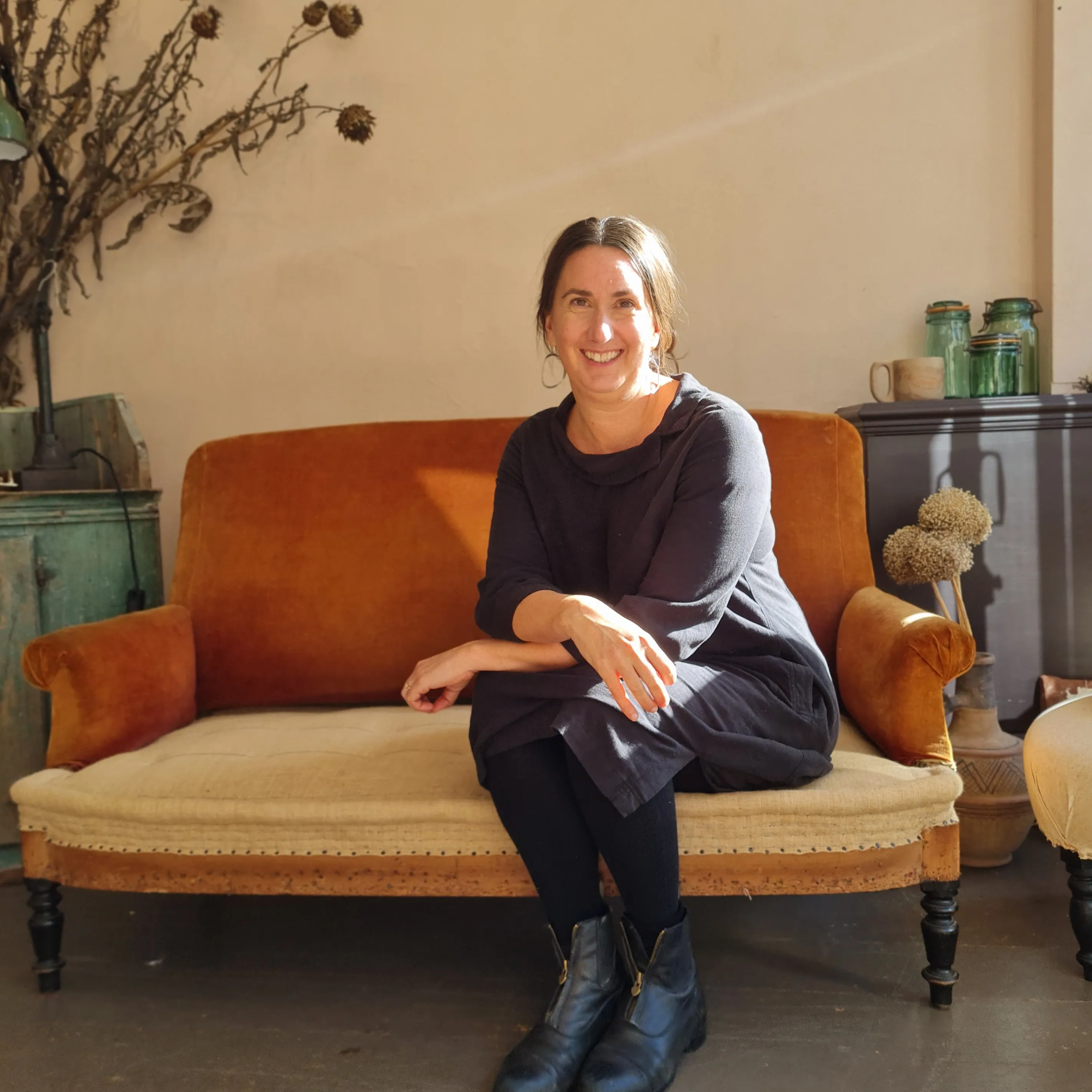
The first step
A free 20-minute conversation
It’s very hard to tell from reading a website! I offer a free introductory 20-minute conversation so we can meet, and you can see how it feels to talk with me.