
Depression and low mood
Therapy for depression and low mood
If low mood or depression has left you feeling heavy, numb or far from yourself, you are welcome here: I offer gentle, unhurried therapy that meets these feelings not as a flaw in you but as a way you have come to cope, and we move at your pace throughout.
How depression can feel
Depression is often quiet and grey rather than dramatic. Some days it may feel like a heaviness that makes ordinary things, getting up, replying to a message, feeling anything at all, take more than you have to give. Other times it can arrive as numbness, a flatness, or a harsh inner voice that seems quite certain you are not enough.
There is no single way it looks, and you do not have to be at your very lowest for your experience to matter. However it is for you just now, you are welcome to bring it here, exactly as it is.
- A heaviness or tiredness that rest does not seem to touch
- Feeling numb, flat, or strangely far away from yourself and from others
- A loud inner critic, shame, or a sense of not being enough
- Losing interest or pleasure in things that used to matter
- Hopelessness, or a quiet wish that things could simply stop
A gentler way of understanding low mood
I do not see depression as a disorder, or as a label to be treated. More often it makes sense as a sign of how we have coped, or are coping, in the circumstances life has given us. Low mood can be the weight of things carried for a long time, grief that had nowhere to go, or a way some part of us learned to keep us safe when feeling too much was not possible.
Seen like this, there is nothing wrong with you to be corrected. Together we can turn towards these feelings with a little curiosity and kindness, and slowly come to understand what they may have been holding or protecting for you.
I came to this work partly through my own experience. In my twenties, art psychotherapy helped me through a depression of my own, and I have not forgotten what it can mean to sit where you may be sitting now.
How I might work with you
We would begin with a free, 20-minute introductory conversation, with no obligation to continue. It is simply a chance to tell me a little about what is bringing you here, to ask me anything you wish, and to notice how it feels to talk together. It is always your choice whether we go on.
If we do, we go gently and at your pace. Nothing is rushed, and nothing happens without your agreement. Depending on what feels right for you, we might work with the ‘parts’ of you that carry the heaviness, the shame or the self-criticism, using Internal Family Systems (IFS), so that these parts come to feel a little less alone and less in charge.
Where words are hard to find, and with depression they often are, we can use art materials as another gentle language. You do not need to be ‘good at art’; this is about expression, not skill. And where your low mood feels rooted in past hurt or overwhelming experiences, EMDR can help us work with those memories so that they may weigh a little less in the present.
I work with adults and young people aged 16 and over. You are welcome to take all the time you need to consider whether this feels right for you.
What can help, honestly
I want to be honest about the evidence, because you deserve that. For depression, the therapies most recommended in the UK by NICE are cognitive behavioural therapy (CBT) and behavioural activation. These are not the ways I work, and if they are what you are looking for, I will gladly say so and help you think about where to find them.
The approaches I offer come at low mood a little differently. IFS is not currently NICE-listed, though it was recognised by the United States SAMHSA registry in 2015 and has a growing evidence base and wide awareness through Richard Schwartz’s book ‘No Bad Parts’. EMDR is recommended by NICE as a trauma-focused therapy for post-traumatic stress; it is less established for depression, but there is promising research where low mood is linked to difficult past experiences. Art psychotherapy is delivered by therapists whose title is protected in law and regulated by the HCPC.
None of this is a promise of a cure, and I will never pretend otherwise. What I can offer is a way of working that many people find helps them feel less alone with their depression, and a little more able to live alongside it and understand it.
If things feel unsafe right now
If you are having thoughts of ending your life, or you feel you may not be safe, please reach out to someone who can help right away. I am not a crisis or emergency service, and there may be times when more immediate support is what you need and deserve.
In the UK you can call the Samaritans free at any time on 116 123, or dial 999 in an emergency. You are welcome to see my crisis page for more ways to find urgent help.
Working together in Devon or online
I see people in person near Ashburton in Devon, and online across the UK and internationally. Sessions are 60 minutes (GBP 90) or 90 minutes (GBP 135), and you are welcome to take your time deciding what might suit you.
You can read more about my fees, therapy in Devon, or online therapy, and when you feel ready, there is no hurry at all, you are warmly invited to get in touch.
How I might work with you
- Internal Family Systems (IFS): for the ‘parts’ of you that carry the heaviness, shame and self-criticism
- Art psychotherapy: a gentle language for what feels too hard to put into words
- EMDR: where low mood feels rooted in past hurt or overwhelming experiences
- Attachment-informed EMDR: when the heaviness grew from early relationships not feeling safe
- How I integrate these ways of working: blending them gently, always led by what feels right for you
Common questions
Can therapy really help with depression?
It can, though I would never promise a cure, and I would gently question anyone who did. Many people find that having a warm, steady space to understand their low mood, rather than fight it, helps the heaviness feel a little less constant and less lonely over time. We would go at your pace, and you can pause or stop whenever you wish.
Do I need to be good at art to try art psychotherapy?
Not at all. This is not about talent, technique or making something beautiful. The materials are simply another way to express what can be hard to put into words, and it is always your choice whether we use them. Many people who tell me they ‘cannot draw’ find it a quiet relief.
What if I feel too low or numb to talk?
That is completely understandable, and you will not be expected to arrive with the right words. We can begin very gently, with as much or as little talking as feels possible. Sometimes making a single mark on paper, or simply sitting together for a while, is enough for a first step. There is no pressure here.
Is this the kind of therapy the NHS recommends for depression?
In honesty, the therapies NICE most recommends for depression are CBT and behavioural activation, which are not the ways I work. My approaches, IFS, art psychotherapy and EMDR, come at low mood a little differently, and suit some people more than others. In our free introductory conversation we can think together about whether they feel right for you.
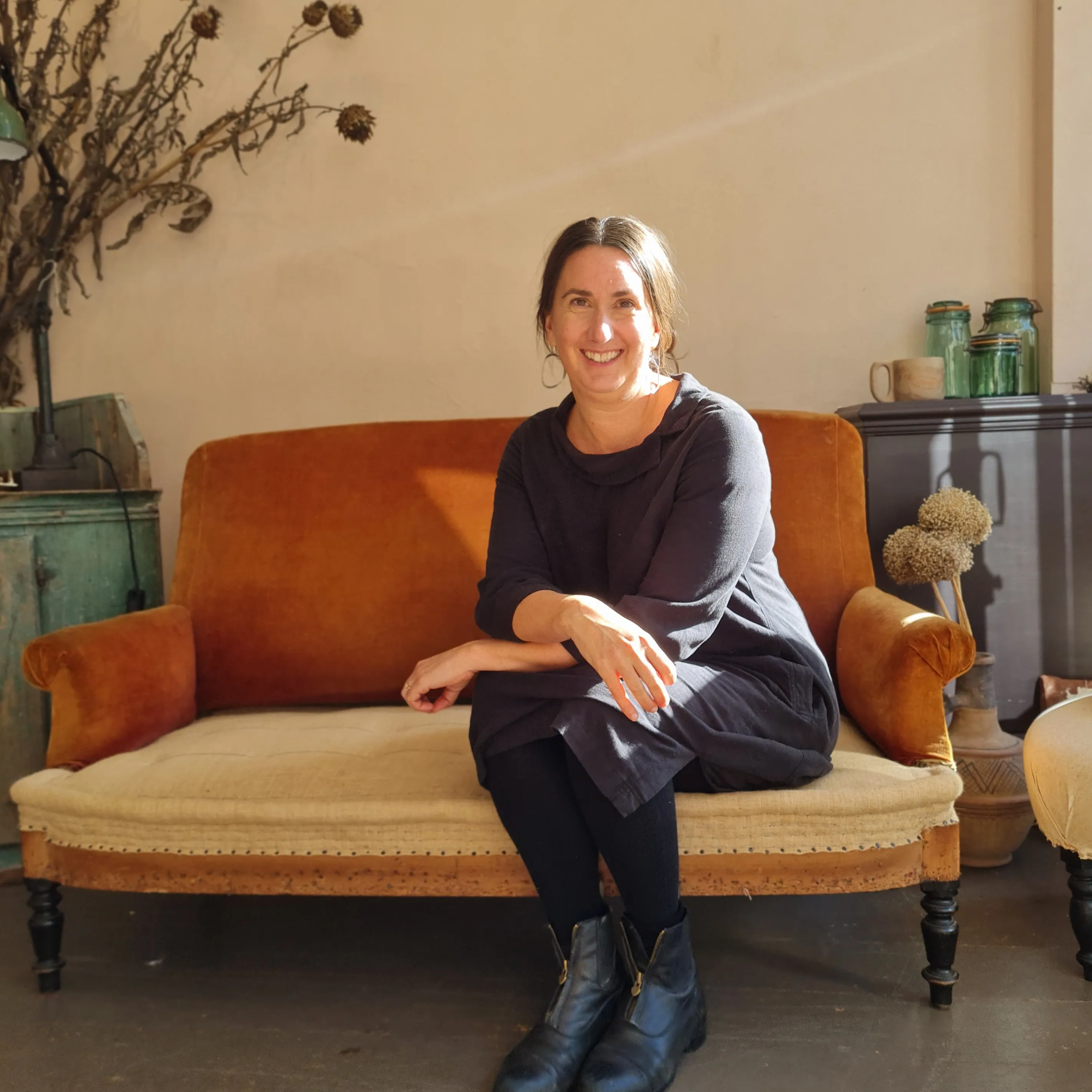
The first step
A free 20-minute conversation
It’s very hard to tell from reading a website! I offer a free introductory 20-minute conversation so we can meet, and you can see how it feels to talk with me.